
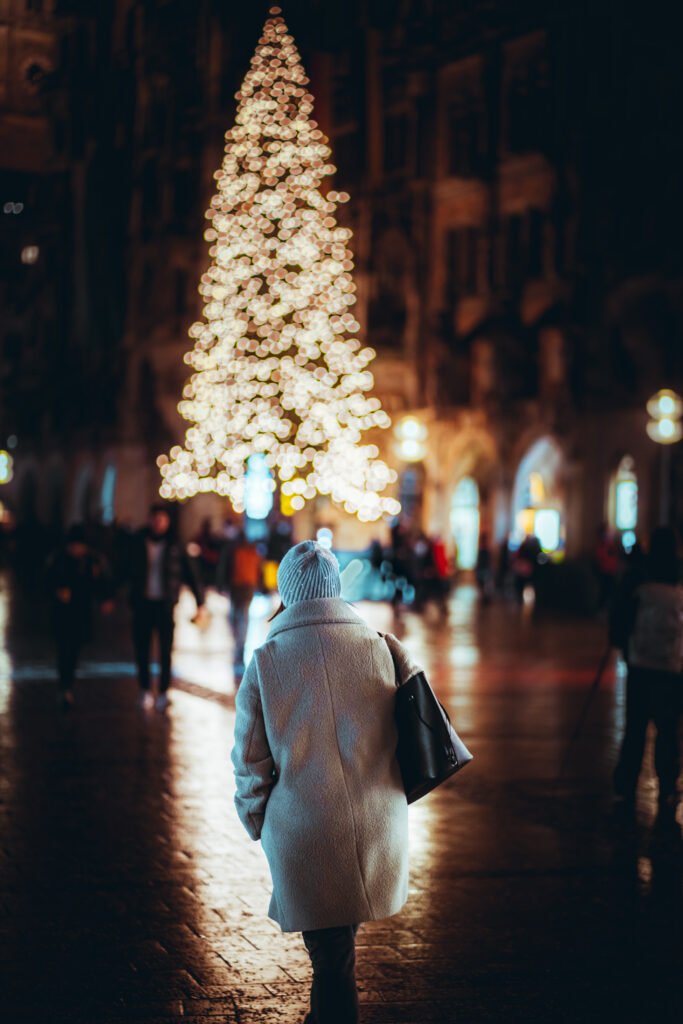
Here are the highlights of December in Spain
I know I’ve said before that the coldest months aren’t exactly my favorites—but December is different. All across Spain, it’s a beautiful time of year: Christmas is just around the corner, the atmosphere feels festive, and the streets are filled with lights and decorations. Also, the holidays are almost here, with the puente de diciembre and Christmas holidays. In this post, we’re going to see why December is such a special month in Spain. Let’s go!
Seasonal produce and seasonal specialties!
December is such a great month when it comes to food! Not only is the seasonal produce amazing, but there are also specialties that are mainly enjoyed in December. Let’s take a look!
First, seasonal produce. December is the month when oranges, mandarins, and apples are at their peak. In fact, the smell of mandarins fills every corner: they are a typical dessert here in Spain, often served alongside other sweet treats and chocolate.
As I mentioned earlier, this month is great for some special treats, and this is why I’m going to dedicate a full section tothis.
Turrón, mazapán and polvorones
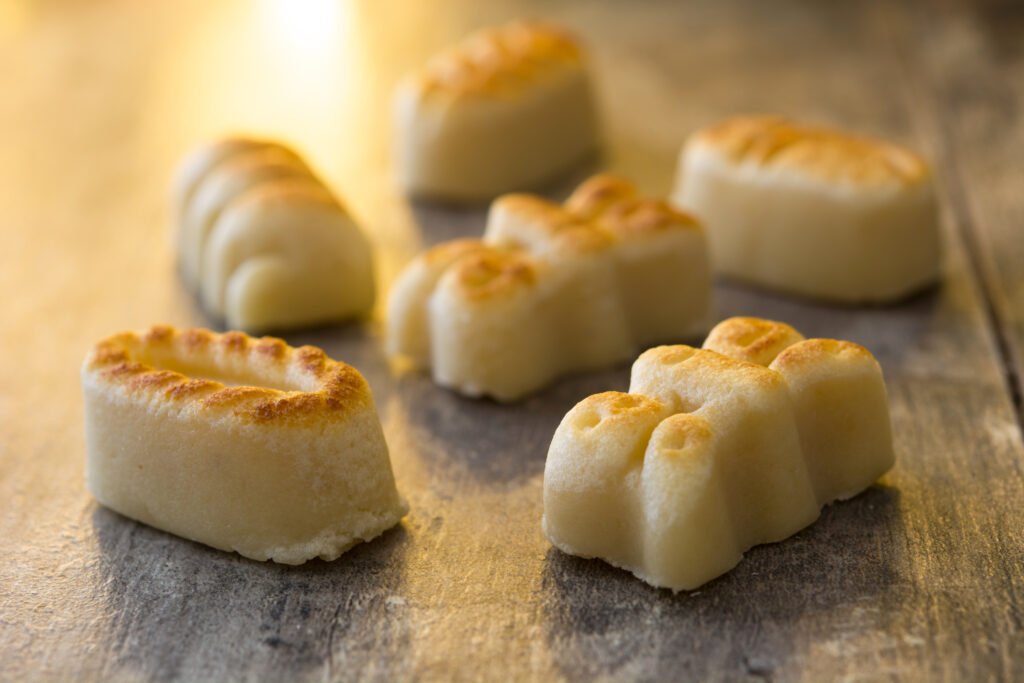
Let’s start with Christmas sweets: turrón, mazapán, and polvorones, traditional Spanish sweets, which are very popular in December in Spain. If you’ve never heard of them, here is a brief description of each:
- Turrón: A traditional Spanish nougat made from almonds, honey, sugar, and egg whites.
- Mazapán: A sweet paste made from ground almonds and sugar, often shaped into small figures or fruits.
- Polvorones: Crumbly shortbread-like cookies made with flour, almonds, and lard, which literally “turn to powder” when you bite them.
Castañas
On the other hand, chestnuts are also typical of this time of year, although perhaps not exactly of December. Ever since autumn begins, you can find castañeros on many street corners, roasting them in small trucks or stalls. They’re sold in paper cones: warm and absolutely delicious. Truly one of my favorites!
Roscón de Reyes
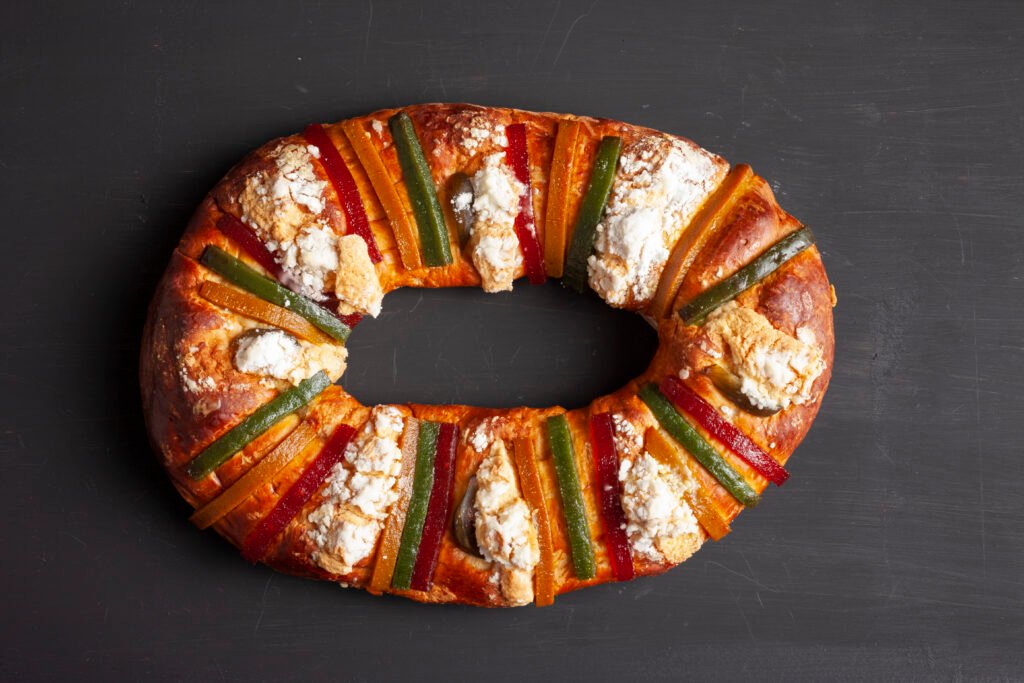
The roscón is more typical in January, on Three Kings’ Day, but you can already find it in many bakeries and pastry shops throughout December. The Roscón de Reyes is a traditional Spanish cake enjoyed on January 6th, the Día de Reyes (Three Kings’ Day). It’s a large, ring-shaped sweet bread, often decorated with fruits, sugar, and sometimes sliced almonds, symbolizing the jewels of a crown. Inside, there are usually two hidden surprises: a small figurine (representing a king or a saint) and a dry bean. Tradition says that whoever finds the figurine is “king or queen” for the day, while the person who gets the bean has to buy the roscón next year!
Vino, cava and sidra
In Spain, no Christmas celebration is complete without something to toast with. Wine, cava, and cider are the stars of the season. Families usually enjoy red wine from regions like Rioja or Ribera del Duero with roasted meats, and white wine from Rueda or Albariño with fish and seafood. Cava, Spain’s sparkling wine from Catalonia, is a must for toasts on Christmas and New Year’s Eve — its bubbles mark the start of the celebrations. And in the north, especially in Asturias and the Basque Country, cider is a traditional favorite for festive gatherings. Together, these drinks bring warmth, joy, and a truly Spanish touch to the holiday table.
Traditions
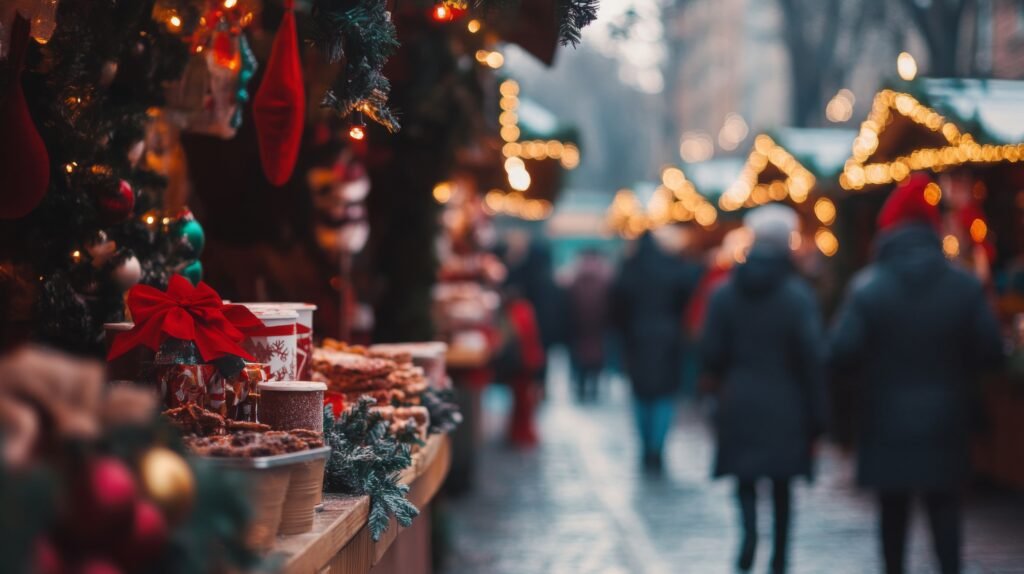
Christmas markets
Christmas markets bring a cozy, festive vibe to Spain every December. One of the most famous markets is he Mercado Navideño Plaza Mayor de Madrid, celebrated for over 100 years, where the square fills with lights, music, and stalls selling ornaments, nativity figures, and sweets. You’ll find similar markets all over the country.
Processions
Spain’s December celebrations are full of local traditions and lively processions. In the Basque Country and Navarra, people celebrate Olentzero, a cheerful charcoal maker who parades through the streets on Christmas Eve, bringing gifts and sweets to children. In Catalonia, families have fun with the Caga Tió, a smiling wooden log that “gives” presents after being playfully hit with sticks. Across the country, there are also nativity parades, Christmas concerts, and the colorful Three Kings’ processions on January 5th. Each region adds its own charm to Spain’s festive season.
Belenes
Even if you’re not religious, nativity scenes (belenes) in Spain are really worth seeing. They appear everywhere in December, from churches and shop windows to town squares, and some of them are truly impressive. You can find tiny handmade ones as well as large displays that look like miniature villages, complete with lights, rivers, and moving figures. It’s a lovely tradition that shows how creative and festive Spaniards are at Christmas.
Christmas lights
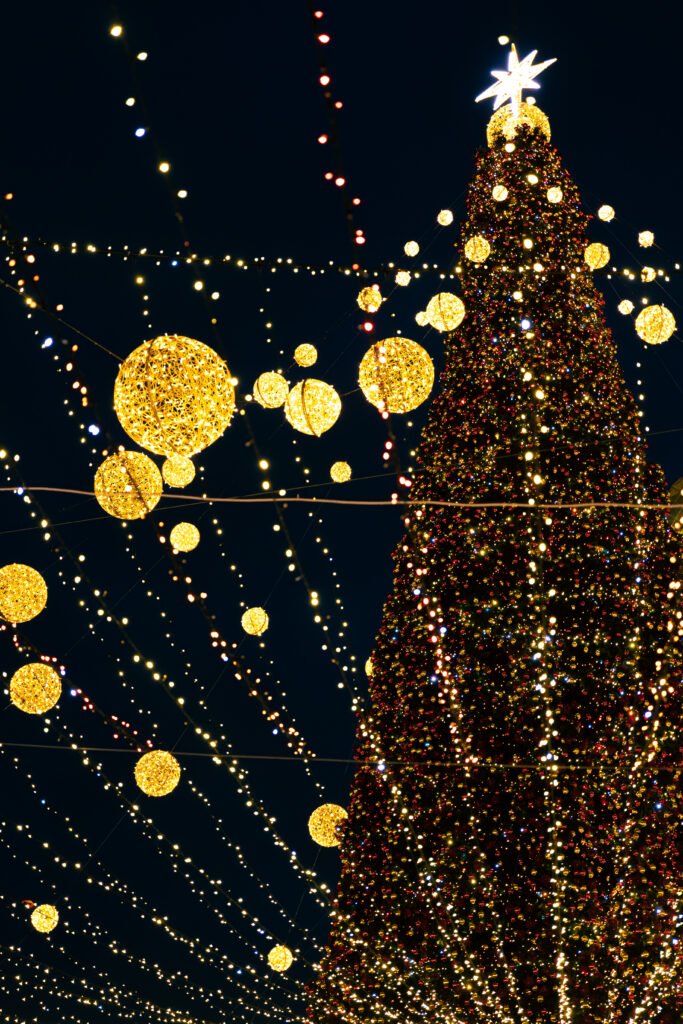
Cities like Madrid, Barcelona, Málaga, and Vigo are famous for their spectacular Christmas light displays that turn the streets into glowing works of art. Locals love to stroll around in the evenings to see them.
12 grapes and New Year’s Eve
One of Spain’s most famous New Year’s traditions is eating twelve grapes at midnight on December 31st. As the clock strikes twelve, everyone eats one grape with each chime: twelve grapes for twelve months of good luck in the coming year. It’s a fun and slightly chaotic moment, as people across the country laugh, rush, and sometimes struggle to keep up with the rhythm of the bells. After the final grape, there’s applause, hugs, and a toast with cava to welcome the new year with optimism.
If you’re planning to visit…
Here’s everything you need to know about the month of December in Spain. See you in January!