
Experience Spain: here are 3 Spanish fiestas you can’t miss
One of the things that really brings Spaniards together is our fiestas. Whether it’s the celebrations in the city where you live or the fiestas del pueblo, it doesn’t matter: we take them personally, plan for them months in advance, and count down the days. Here’s a fun fact: in Pamplona, we have a digital clock that doesn’t show the time: it counts down the days, hours, minutes, and seconds until the next fiestas. Surprised? That’s just how we roll. It’s part of our culture, the way we bond with each other, build community, and celebrate life.
So, of course, this blog has to include a post about Spanish fiestas. With so many amazing ones to choose from, I’ve picked my personal favorite three. Save this post for your trip to Spain, see if you can time it right, and get ready to discover three Spanish fiestas that will definitely surprise you. Let’s go!
Fiestas de San Fermín (Pamplona, July 6-14)
We’re starting off strong! You’ve probably seen videos or heard about these fiestas. The Fiestas de San Fermín, or Sanfermines, kick off on July 6 with the Chupinazo, a rocket fired from the balcony of Pamplona’s City Hall. From above, the square looks like a sea of white and red, full of people waiting with excitement as the fiestas officially begin.
Some cool facts
People dress in white and wear a red scarf and sash
White symbolizes freshness; red represents devotion to San Fermín, the patron saint. It’s very rare to see anyone not following this dress code. The red scarf is worn to represent the blood of San Fermín, a martyr who died in the 3rd century. The sash is tied around the waist to complete the outfit.
People run the encierros (running of the bulls)
The running of the bulls is basically a race where participants run through the streets of Pamplona ahead of bulls making their way to the bullring. People prepare well in advance, as it requires courage, caution, and a huge adrenaline rush. The runs take place at 8 a.m. to avoid the heat, and there’s a run every day during the fiestas.
La comparsa: gigantes y cabezudos
The comparsas are a symbol of Pamplona and an essential part of the Fiestas de San Fermín. In short, they are a troupe of papier-mâché figures, and they include gigantes, cabezudos, kilikis, and zaldikos. The comparsa moves through the streets, interacting with the crowd. If you want to learn more about them, you can read more here.
There are plenty more iconic things about the Fiestas de San Fermín, but I think these are the essentials for now. If you want to learn more, maybe we could do a post exclusively about San Fermín. Let us know in the comments if you would be interested!
Las Fallas (Valencia, March 15-19)
These are also called Fiestas de San José, a traditional celebration that honors Saint Joseph. The night before the main day, bonfires are lit in a ritual known as the Cremà, marking the culmination of a week-long fiestas. Actually, “falla” means “torch“. For many, the Fallas are part of their identity, and taking part in the rituals connects the community with its roots.
Some cool facts
Ninots, fallas and Cremà
The ninots are huge satirical figures made of wood or papier-mâché, depicting political or social figures, current events or even everyday situations. Together, they form a complete installation called a falla. Some can reach several meters in height, and at the end of the fiestas, all of these figures are burned in an incredible fire spectacle: the Cremà.
And speaking of the Cremà, on the day it takes place you can also enjoy the Cabalgata del Fuego, a parade of devils, floats and fireworks that fills the streets of Valencia with gunpowder, and it is considered the prelude to the burning of the Fallas.
Mascletàs
The Mascletàs are a pyrotechnic spectacle held during Las Fallas. They consist of very powerful firecrackers arranged in a line and ignited with a fuse. Unlike fireworks, they’re not meant to impress with lights, but with their rhythmic and musical explosions that you can hear and feel in your body.
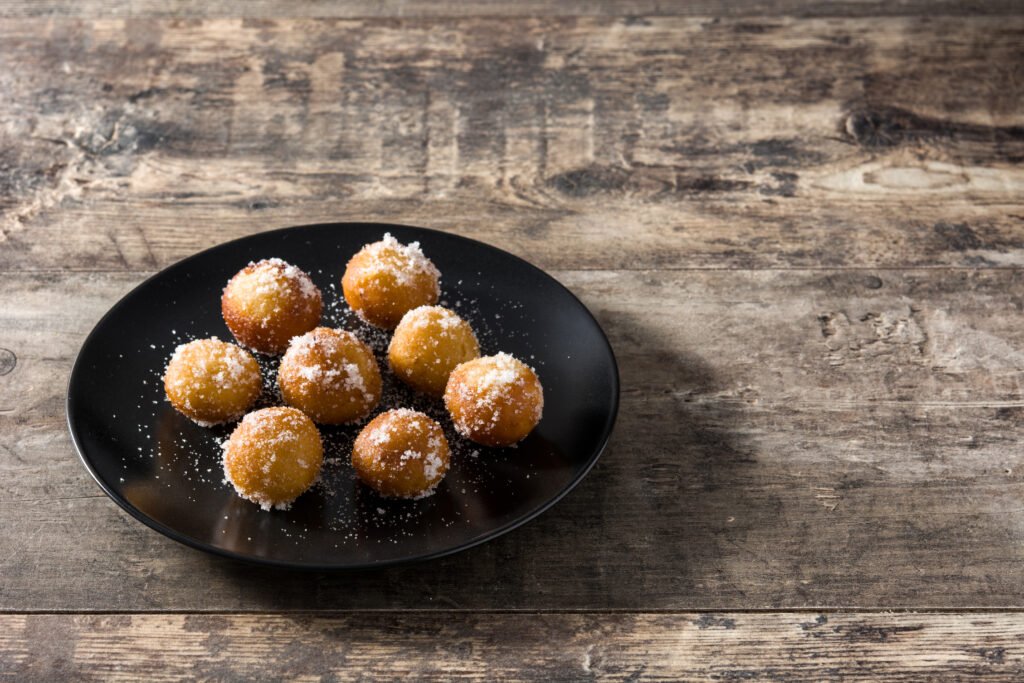
Buñuelos with chocolate
During these Spanish fiestas, it’s traditional in Valencia to enjoy a good chocolate with buñuelos at any time of day. While you’ll find stalls all over the city, we recommend stopping at a café, like Bertal in Plaza de la Reina, to savor it even more.
La Feria de Abril (Sevilla, April 21-26)
This is a spring festival where people gather in a large venue called the Real de la Feria, where temporary casetas (booths) are set up, and through which up to half a million visitors pass. It is a true marvel, full of color, dancing, food, and an emotionally moving celebration of life.
Some cool facts
Casetas
The casetas are small structures within the Feria grounds where people gather to eat, drink, dance, and have a good time. Each caseta usually belongs to a family, social club, or association, and many are private, though some are open to the public. They are decorated with paper lanterns and colorful fabrics, and they are the heart of the Feria.
Noche del pescaíto
Monday night marks one of the most eagerly awaited moments for sevillanos: the traditional pescaíto frito dinner. Although the fair hasn’t officially started yet, the casetas fill up with family and friends enjoying typical dishes like puntillitas, boquerones, calamares, or cazón en adobo. It’s a relaxed evening that serves as the starting signal for the week of the fair.
A standout tradition: the trajes
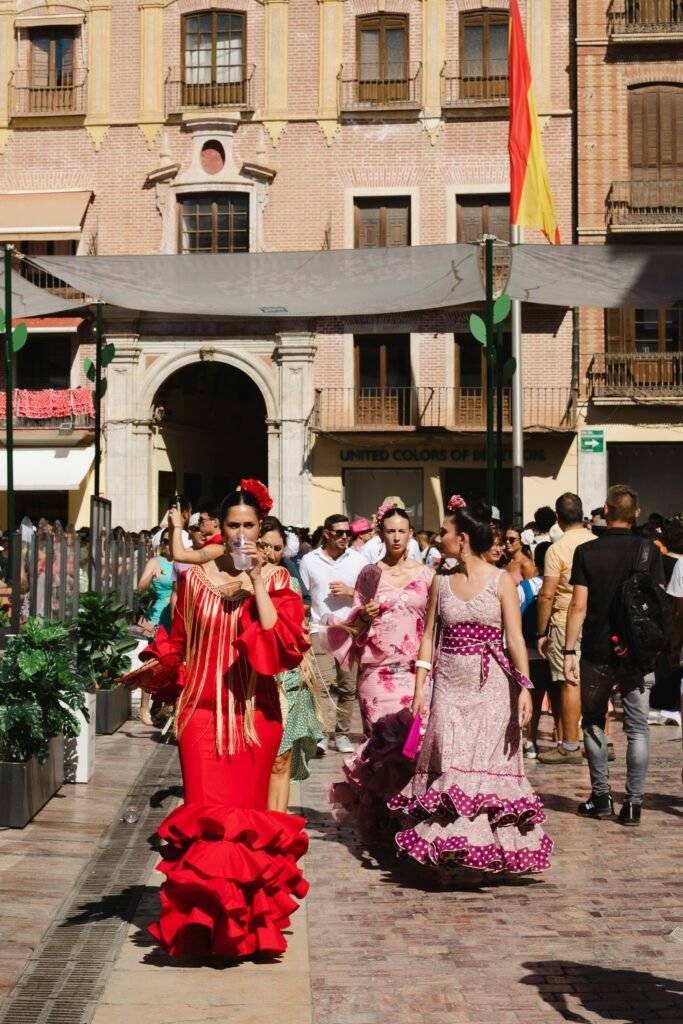
The traditional costumes are one of the most striking symbols of the Feria de Abril, impossible to ignore once the feria begins. Women wear the traje de flamenca, a colorful, ruffled dress often paired with a shawl and ornate hair accessories, while men wear traje corto, a short jacket, high-waisted trousers, and boots. These outfits are a celebration of culture and identity, reflecting centuries of tradition, craftsmanship, and pride. Walking through the fairgrounds, the sea of colors and elegant designs creates a festive atmosphere that truly defines the spirit of the fair.
Which of these Spanish fiestas caught your attention the most?
As you can see, Spanish fiestas aren’t just events on a calendar, but they are a way of life too. These are some of our favorites, but there are plenty more to discover. Which one caught your attention the most? Tell us in the comments, and let us know if you’d like us to highlight and explain even more!